In a world of subscription models and data renting, DoMind treats you as the owner of your digital life.
In the digital world, most software platforms collect, store, and manage user data on centralized servers.
This means the information you create inside an app often lives on infrastructure controlled by the company that built the product.
Schedules, notes, tasks, and personal plans are frequently stored in cloud databases owned by external organizations.
This raises an important question: who actually owns your data?
The concept of data sovereignty addresses this question directly.
Data sovereignty means that the individual who creates data retains full ownership and control over it.
Instead of relying on centralized platforms, users maintain authority over where their information is stored and how it is used.
For productivity tools, this idea becomes especially important.
Productivity apps contain detailed information about your life.
Your planner may include:
This information forms a detailed map of your daily life.
When this data is stored on external servers, users must trust that the company managing the service will protect it responsibly.
For privacy-conscious users, this can feel uncomfortable.
Many people prefer tools where they truly own their productivity data.
Many modern apps operate using subscription models combined with centralized data storage.
In these systems, users often pay recurring fees while their data remains stored on the company’s servers.
Although the user created the information, they may not fully control it.
This dynamic is sometimes described as data renting.
You create the information, but the platform ultimately manages where it lives.
If the service shuts down or changes its policies, access to that data can become uncertain.
Data sovereignty challenges this model by placing control back in the hands of the user.
A growing number of users are exploring the concept of digital independence.
Digital independence means using software that does not require constant reliance on centralized infrastructure.
Instead of depending on remote servers, users operate systems that remain under their own control.
This philosophy is particularly relevant for productivity software.
A planner that supports data sovereignty allows users to manage their lives without external dependencies.
The system remains stable even if the internet disappears or company servers become unavailable.
One of the most effective ways to achieve data sovereignty is through local-first software.
Local-first applications store data directly on the user’s device rather than on centralized servers.
In this architecture:
This approach restores control to the individual user.
Your digital life remains yours.
DoMind was designed with the philosophy of data ownership in mind.
Instead of forcing users into cloud-dependent infrastructure, the app follows a local-first architecture.
Your tasks, notes, events, habits, and routines are stored directly on your device.
This design ensures that your productivity system remains under your control.
No centralized server is required to manage your planner.
Your data remains exactly where it was created.
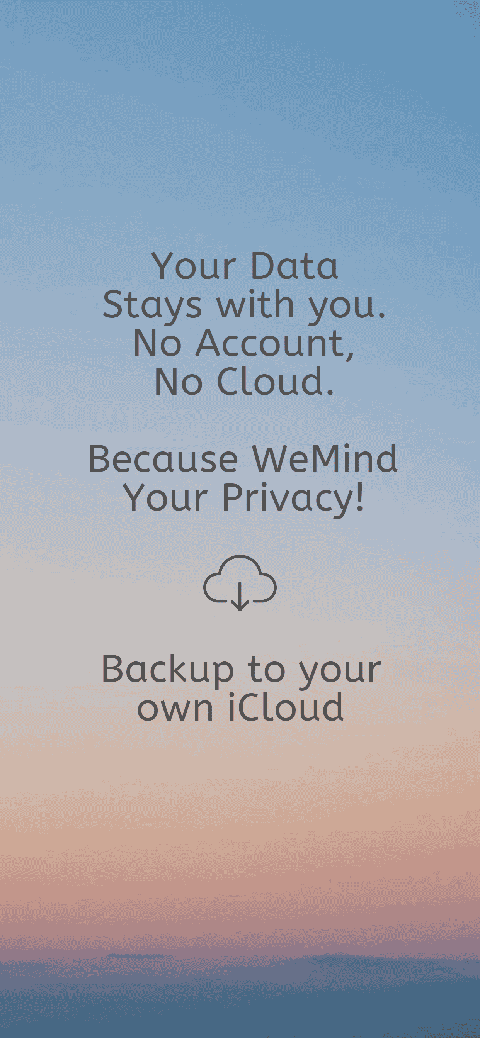
Because DoMind stores information locally, your productivity data is not monitored or analyzed by external services.
The app operates as a private environment where planning happens independently.
This means:
Your planner becomes a personal tool rather than a platform that observes you.
Another advantage of data sovereignty is independence from network infrastructure.
Because DoMind stores information locally, the planner functions completely offline.
This means your productivity system works anywhere:
Your ability to organize your life does not depend on connectivity or remote services.
Data sovereignty does not mean sacrificing convenience.
DoMind allows users to create backups whenever they choose.
Instead of forcing data into company servers, backups can be stored in services you already control.
Users can back up their planner to:
Because the user initiates these backups, control remains entirely in their hands.
If you install DoMind on another device, your productivity system can be restored quickly.
With a single tap, you can import your backup and recover your complete planning environment.
This restores:
Your data remains portable without surrendering ownership.
Software design is not only about features. It is also about philosophy.
Some platforms treat user data as a resource to be collected and analyzed.
Other systems treat users as owners of their own information.
Ethical software respects the autonomy of its users.
It avoids unnecessary data collection and prioritizes transparency.
Tools designed with these principles empower individuals rather than extracting value from them.
Productivity tools should help people organize their lives, not compromise their independence.
Data sovereignty allows individuals to reclaim control over the information they create.
Instead of storing personal plans in centralized platforms, users maintain ownership of their own productivity systems.
DoMind combines local-first architecture, offline capability, and user-controlled backups to create a planner that respects digital independence.
Your tasks, notes, habits, and routines remain exactly where they belong — under your control.
When you own your data, you also own your plan.
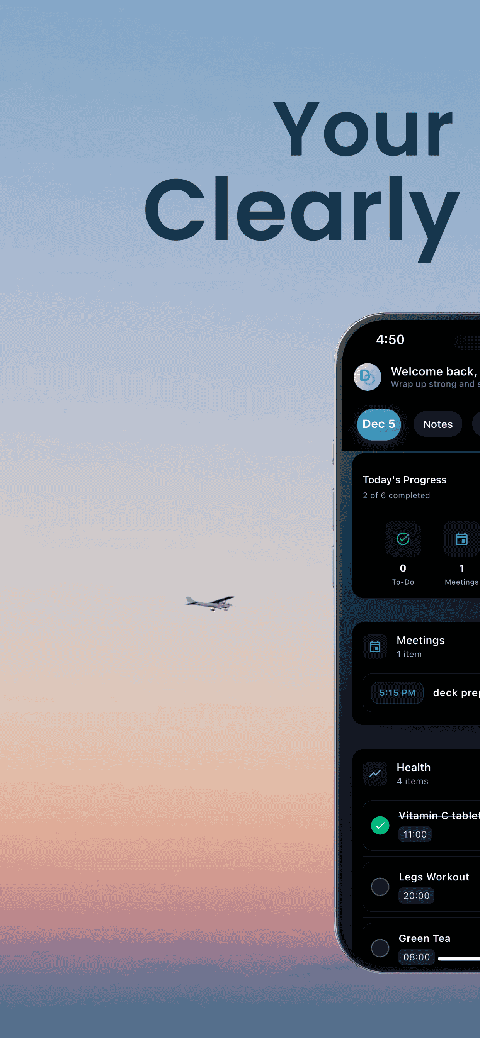
See your entire day visually in one place with DoMind's visual daily planner and task overview.

A clean visual planner designed for focus and calm.

Your life, organized
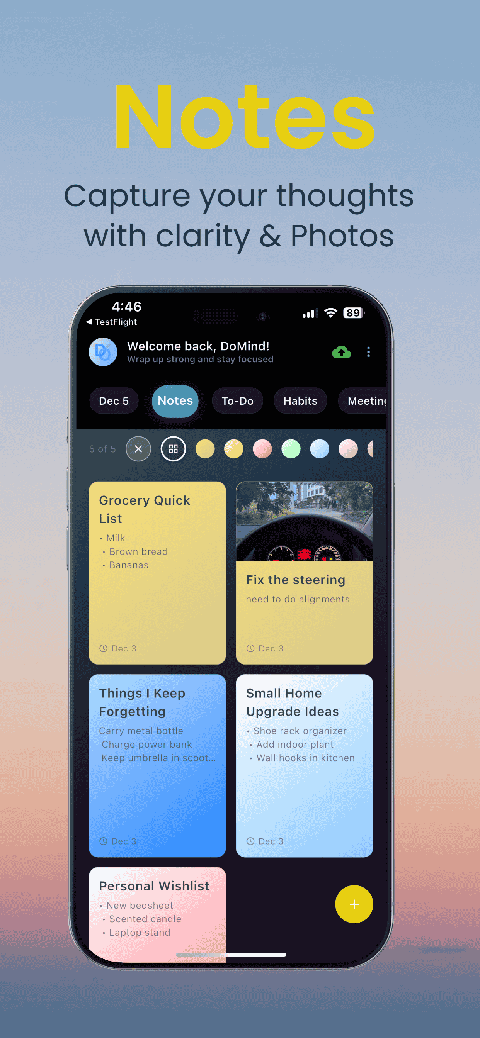
Visual notes
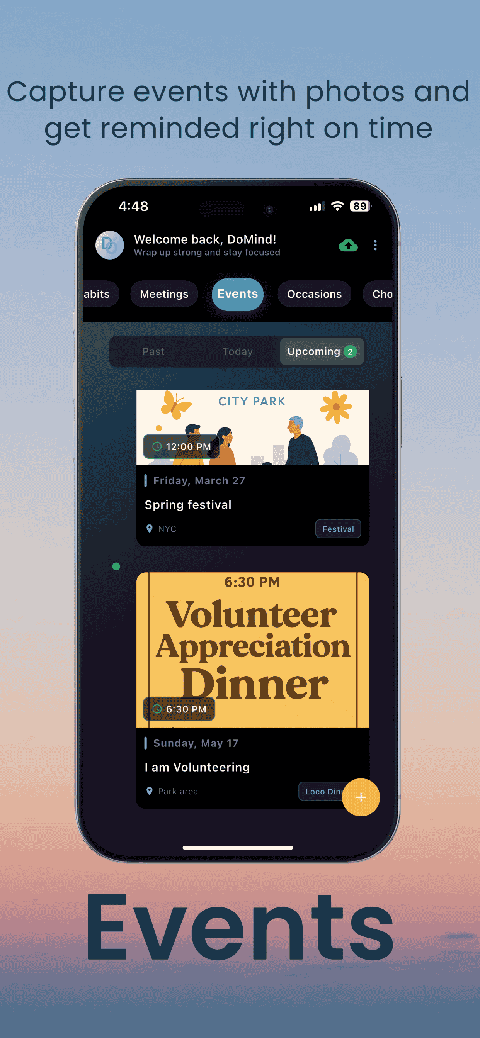
Plan events
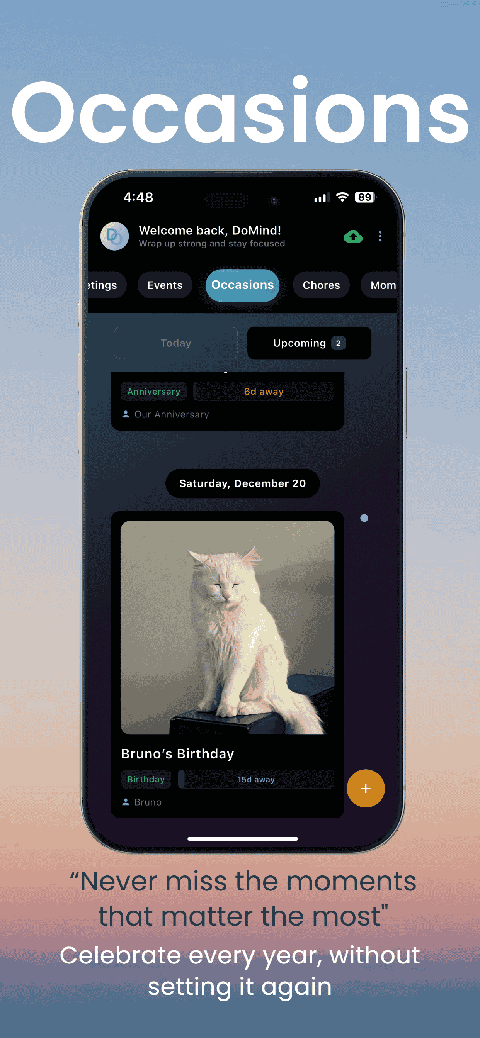
Private memories
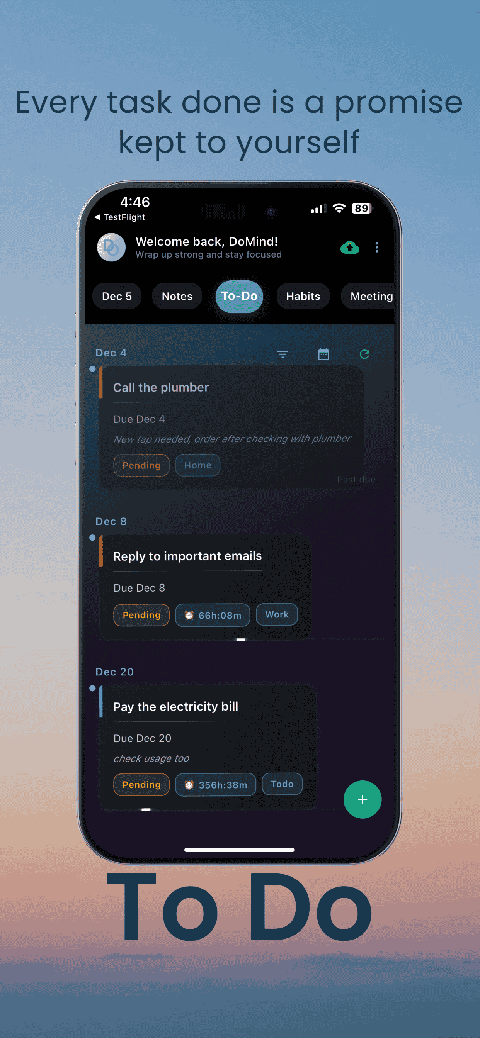
Manage tasks visually
Choose themes
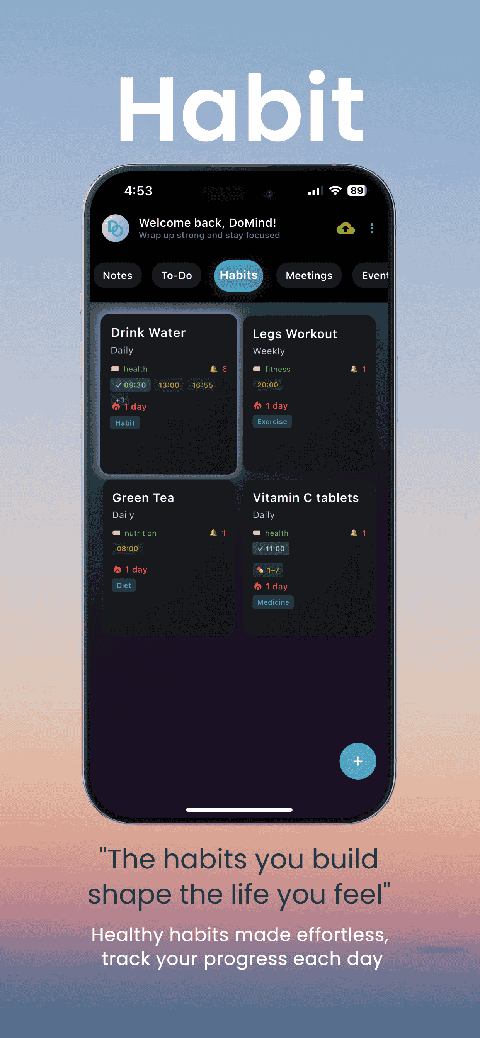
Track habits
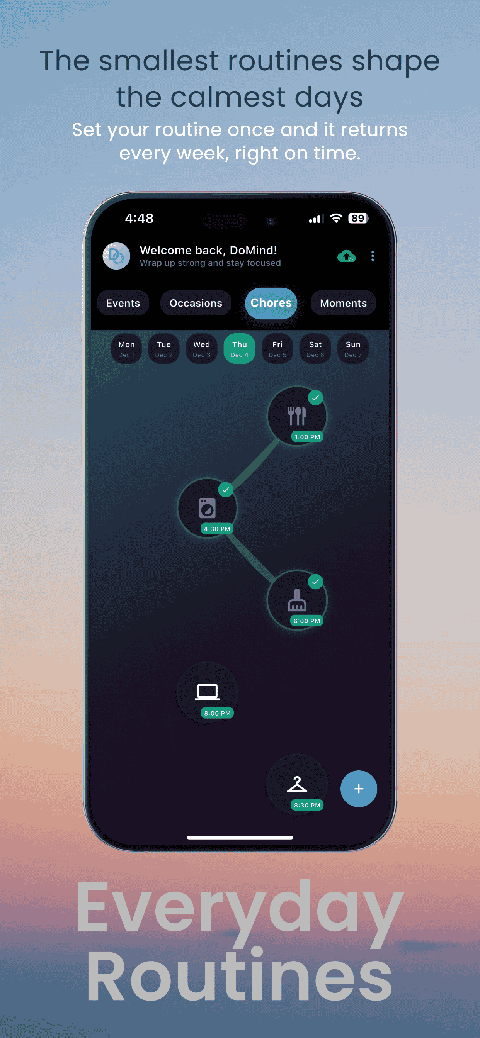
Organize routines
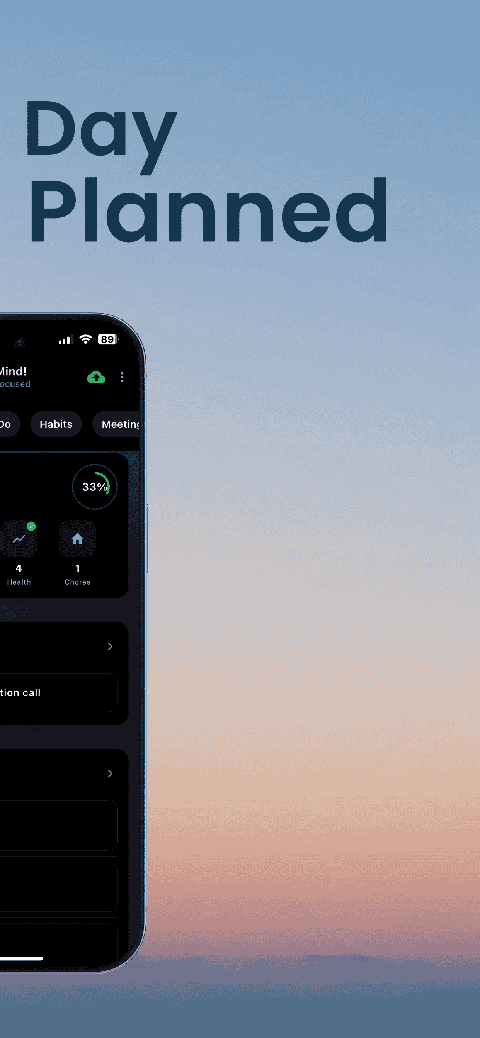
Visual experience
Calm interface
Standard planners feel like a wall of text. They trigger overwhelm.
Download DoMind free — the visual planner that respects your privacy.
