Endless text lists feel incredibly restrictive to visual minds. DoMind allows you to spatially see connections, timelines, and categories at a single glance.
Most productivity systems are built around text.
To-do lists, bullet points, and long blocks of written tasks dominate traditional planning tools.
For some people, this format works well. But for individuals who naturally think visually, text-heavy planning systems can feel limiting.
Many people process information through images, spatial relationships, and visual patterns rather than linear lists.
These individuals are often described as visual thinkers.
A planner for visual thinkers works differently. Instead of forcing ideas into rigid text structures, it allows information to appear in a way that mirrors how the brain naturally processes it.
Visual organization helps transform planning from a chore into something intuitive.
Visual thinkers process information primarily through imagery and spatial relationships.
Instead of mentally organizing ideas as sentences or lists, they often imagine concepts as diagrams, timelines, or interconnected elements.
This cognitive style is sometimes associated with visual learning and spatial intelligence.
People who think visually may prefer tools such as:
These tools help transform abstract information into something that can be seen and understood instantly.
When planning systems rely only on text, visual thinkers may feel mentally constrained.
Most digital planners follow a strictly linear structure.
Tasks appear in vertical lists, often sorted by date or priority.
While this approach can work for sequential thinking styles, it may not align well with visual cognition.
Visual thinkers often prefer systems where they can see:
A non-linear planner allows users to understand their schedule as a visual landscape rather than a static list.
This makes planning feel more natural for spatial thinkers.
Visual planning transforms abstract schedules into concrete representations.
When tasks and responsibilities appear visually, the brain can interpret them faster.
This helps users quickly understand:
A visual planning app reduces cognitive effort because information becomes easier to process.
Instead of reading long lists, users simply observe the structure of their day.
DoMind was designed as a visual planner for modern thinkers.
The app organizes tasks, routines, habits, and schedules inside a clear visual environment that makes planning easier to understand.
Rather than presenting information as dense text lists, DoMind emphasizes structure and visual clarity.
Users can manage multiple aspects of life within the same visual planning system:
These elements appear within a structured visual layout that helps users understand their responsibilities at a glance.
For visual thinkers, time is easier to manage when it can be seen.
Instead of interpreting numbers on a clock or scanning lists of tasks, visual planning allows users to understand the flow of a day spatially.
This approach makes it easier to answer questions such as:
A visual timeline helps convert abstract time into something concrete.
This can make daily planning feel significantly more intuitive.
Habit formation becomes more motivating when progress is visible.
Instead of reading lists of completed tasks, users can see patterns developing over time.
Visual habit tracking allows users to observe:
Seeing progress visually reinforces motivation and helps maintain consistency.
Life rarely exists in isolated categories.
Work, personal responsibilities, routines, and goals often overlap.
A visual productivity system helps users understand these relationships.
Within DoMind, tasks, events, habits, and chores exist within the same environment.
This allows users to see how different responsibilities interact throughout the day.
Instead of managing separate systems, everything becomes part of a unified visual plan.
Visual planning tools are particularly helpful for individuals with neurodivergent cognitive styles.
People with ADHD, autism, or strong visual learning preferences often benefit from systems that reduce text overload.
A visual thinker productivity app helps reduce cognitive friction by presenting information clearly.
This can make planning feel less overwhelming and more engaging.
DoMind embraces this philosophy by creating a calm visual environment that aligns with natural thinking patterns.
Productivity systems should adapt to the user, not the other way around.
For visual thinkers, planning becomes easier when information appears in spatial and visual formats rather than long text lists.
A planner for visual thinkers provides a system where ideas, tasks, and schedules can be understood at a glance.
DoMind combines visual structure, flexible planning tools, and a calm interface to create a productivity environment that aligns with visual cognition.
When your planning system reflects how your mind naturally organizes information, staying organized becomes much easier.
Instead of forcing your thoughts into rigid lists, you can finally map your mind visually.
See your entire day visually in one place with DoMind's visual daily planner and task overview.

A clean visual planner designed for focus and calm.

Your life, organized
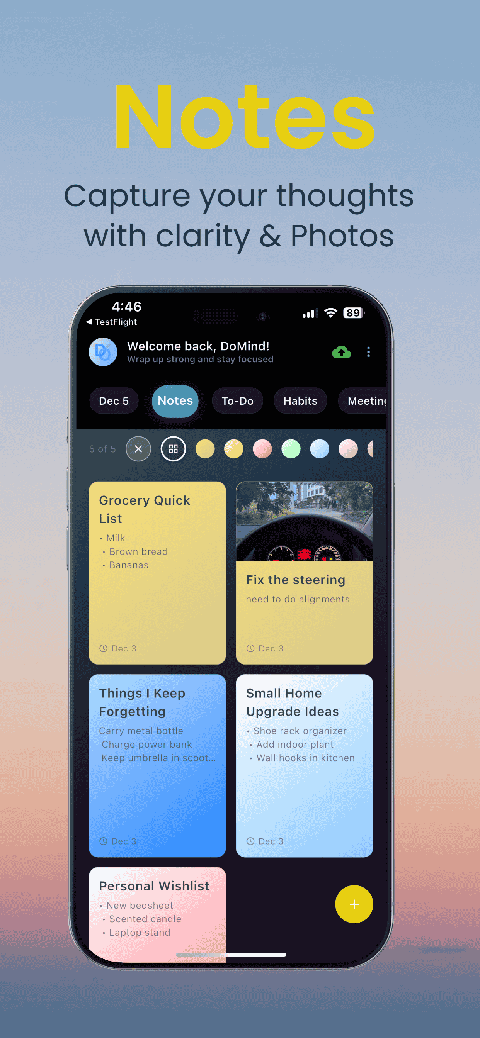
Visual notes

Plan events

Private memories
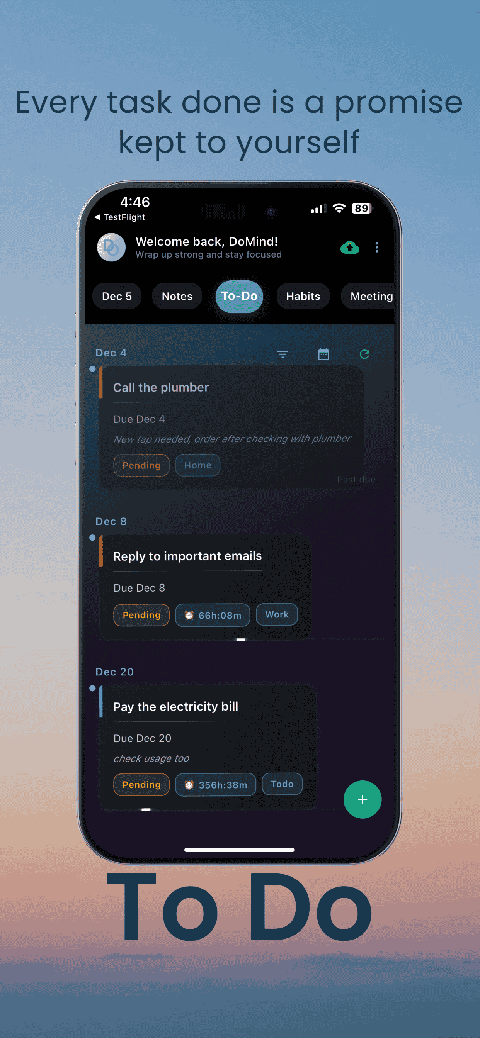
Manage tasks visually

Choose themes
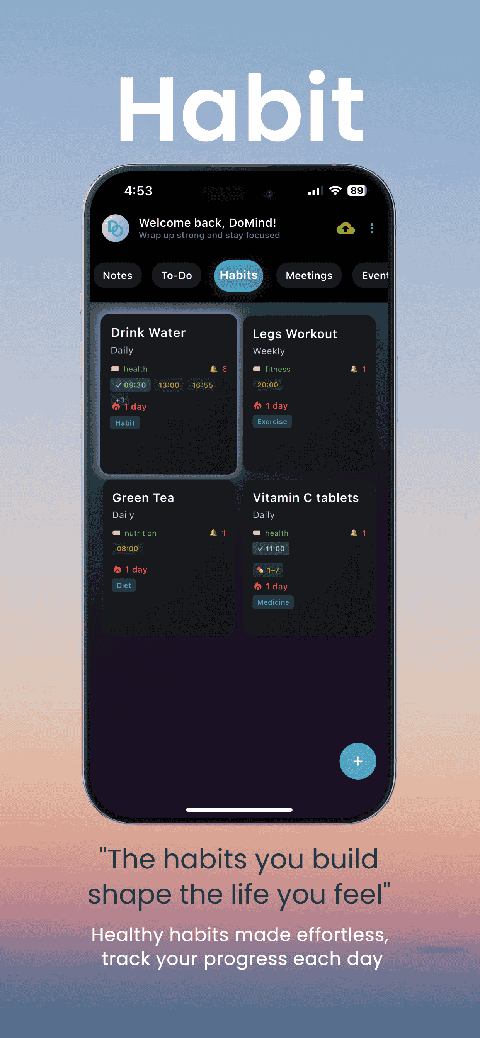
Track habits

Organize routines

Visual experience
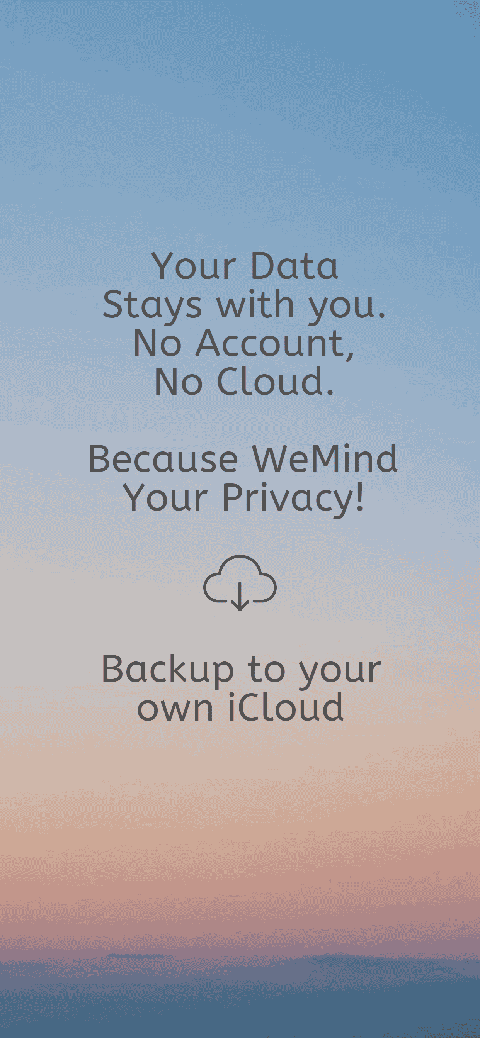
Calm interface
Standard planners feel like a wall of text. They trigger overwhelm.
Download DoMind free — the visual planner that respects your privacy.
